Call Us
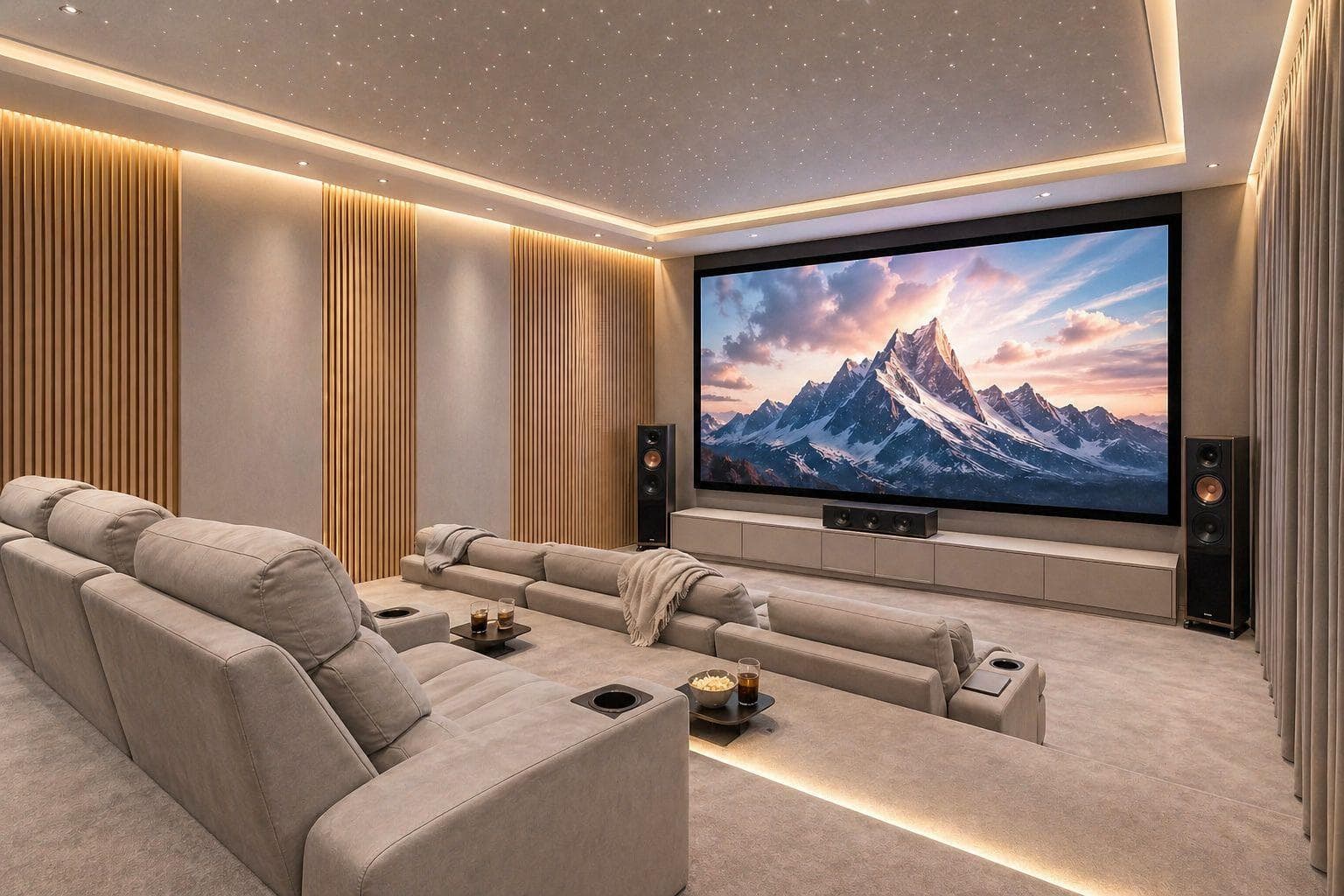
Every room has resonances — frequencies where the walls reinforce or cancel the sound. In a normal living room this is a curiosity; in a dedicated cinema it is the difference between reference-grade and merely loud. Reference cinema design begins by choosing dimensions, materials, and geometry that keep the modes controllable, then adds acoustic treatment where they cannot be avoided.
Treatment as architecture
Diffusion panels, bass traps, and absorption are architectural elements first, acoustic tools second. Hidden inside upholstered walls or joinery, they let the room remain a room — a place people want to sit in for three hours — while still measuring flat down to the low end.
Calibration is a promise, not a step
Every cinema we deliver is measured, calibrated, and re-measured. Sub-woofer placement is mapped to the seats, not to convenience, and the delay of every driver is trimmed to the millimetre. The projector matters — but only after the room is correct.
Ready to build a room that sounds like the master tape?